

No products in the cart.
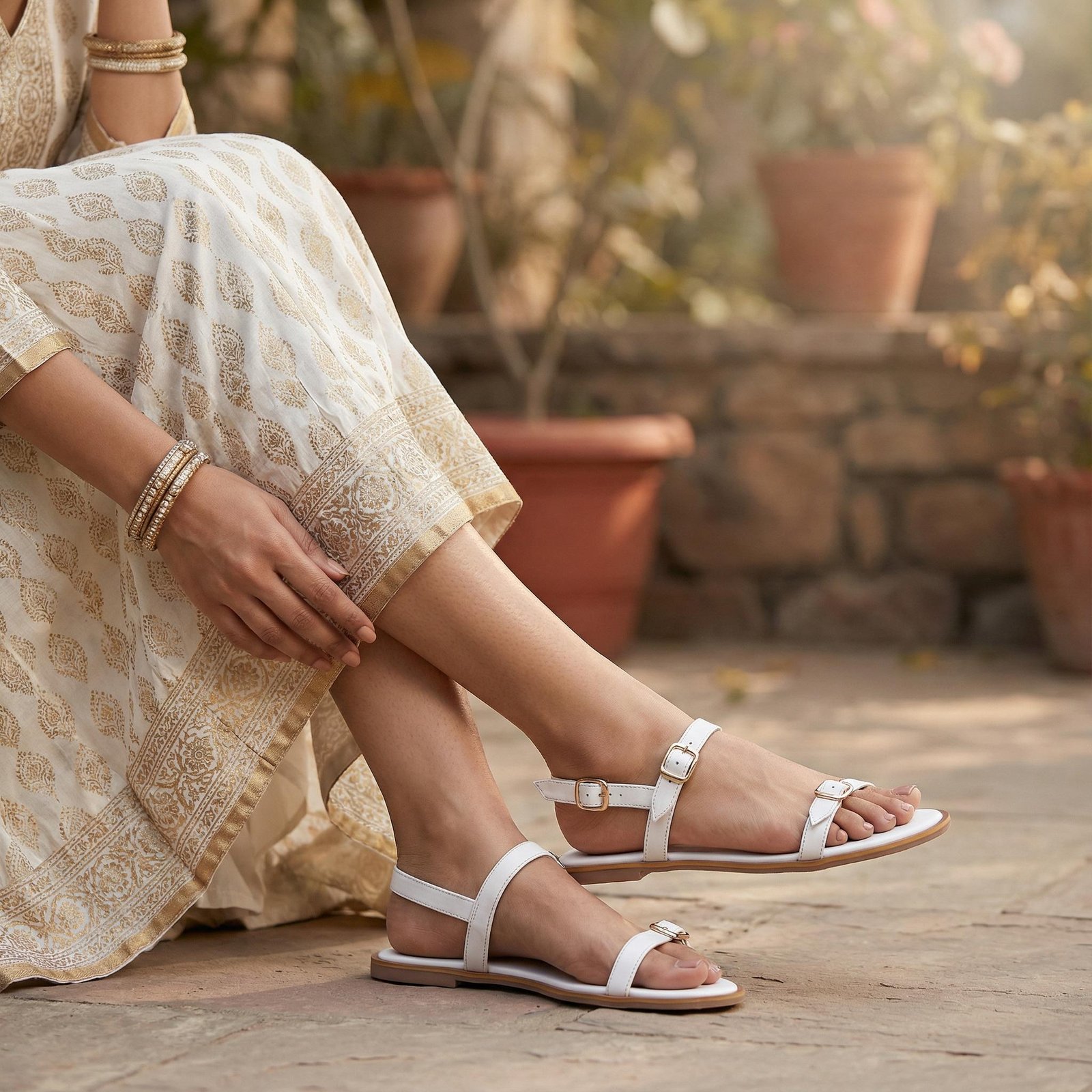
Flats have a reputation for being easy footwear.
But “flat” doesn’t automatically mean “comfortable.”
A pair can still be too tight, too loose, poorly shaped for your foot or simply wrong for the amount of walking you have planned.
If you’re looking for flats to wear through a longer day, focus on the complete fit rather than heel height alone.
Quick Guide
| Check | What to notice |
|---|---|
| Size | Foot secure without painful squeezing |
| Toe room | Toes able to sit naturally |
| Straps | Secure without digging or rubbing heavily |
| Sole | Appropriate flexibility and feel for the design |
| Cushioning | How the footwear feels underfoot |
| Movement | Excessive slipping or foot movement |
| Your routine | Walking, standing, commuting and surfaces |
1. Start with the Correct Size
Your usual shoe size is a starting point, not a guarantee.
Different shapes can feel different at the same labelled size.
Check how the specific pair fits your length, width and toe shape.
2. Give Your Toes Space
Flats can still compress the front of the foot.
Your toes shouldn’t feel painfully squeezed together or pushed against the edge from the moment you put the shoes on.
Pay particular attention to narrower front shapes.
3. Check Whether Your Heel Stays Secure
If the design has a closed back or heel strap, notice whether your foot repeatedly lifts or slips.
Some movement may be normal depending on the style, but constantly fighting to keep the shoe on can become distracting over a longer day.
4. Look at Strap Placement
Straps can help secure the foot.
They can also become pressure points if they’re too tight or positioned poorly for you.
Walk in the footwear and notice whether a strap repeatedly rubs the same area.
5. Don’t Judge Cushioning in Isolation
Soft cushioning can feel pleasant when you first try a pair.
But cushioning doesn’t fix an incorrect size, unstable fit or toe box that doesn’t suit your foot.
Consider it one part of the complete shoe.
6. Think About Sole Flexibility
Different flat designs use different sole constructions.
Some feel more flexible; others feel more structured.
Neither is automatically right for everyone.
Try walking naturally and notice whether the sole works with the way the footwear is designed to move.
7. Consider How Much Walking Your Day Includes
“All day” means different things.
Eight hours mostly seated at a desk is not the same as a day spent commuting, shopping and walking between locations.
Choose for your actual routine.
8. Think About the Surface
Smooth indoor flooring, pavement and uneven outdoor surfaces all interact differently with footwear.
If your routine regularly crosses several surfaces, take that into account.
9. Try Both Shoes
Feet aren’t always identical in size or shape.
Don’t judge a pair after trying only one shoe.
Put both on and walk.
The fit needs to work for both feet.
10. Try New Flats Before a Long Day
If possible, don’t make an important full day the first extended wear of a new pair.
Trying them indoors on a clean surface gives you a chance to notice slipping, rubbing or pressure before relying on them outside.
11. Don’t Assume They’ll “Break In” Enough to Fix a Bad Fit
Materials may soften or change slightly with wear, but you shouldn’t depend on significant discomfort disappearing.
If a pair feels clearly too small, painfully tight or unstable, reconsider the size or shape.
12. Match the Flat to Your Wardrobe
Comfort matters, but so does usefulness.
A pair you’re happy to wear with several outfits is more likely to become part of your real routine.
Why Flats Deserve a Place in Every Woman’s Wardrobe explores that versatility in more detail.
13. Listen to Early Warning Signs
Repeated rubbing, painful pressure, toes feeling compressed or the shoe constantly slipping are signs worth paying attention to.
Footwear should work with your day, not become the only thing you think about during it.
A Flat You’ll Reach for Again
The best everyday flats are the ones that fit your feet, suit your routine and work with enough of your wardrobe to earn repeat wear.
Don’t choose only because the shoe has no heel.
Choose because the whole pair works for you.
Explore the TwoSolez Flats Collection for footwear made for days that turn into plans.
Because some shoes are worn. Some are remembered.
Frequently Asked Questions
Are flats always comfortable?
No. Comfort depends on fit, shape, straps, sole construction, cushioning and the individual wearer.
Should flats fit tightly?
They should feel secure without painful squeezing. A very tight fit isn’t something you should automatically accept in the hope it changes later.
How do I know if flats are too small?
Signs can include painful toe pressure, squeezing, your foot extending beyond the intended footbed or straps feeling excessively tight.
Why do my flats slip off?
The size, heel shape or shoe construction may not hold your foot securely. Check the fit rather than automatically choosing a smaller size.
Should I wear new flats around the house first?
Trying them indoors on a clean surface can help you understand the fit before wearing them for a longer day.
Does more cushioning always mean more comfort?
Not necessarily. Cushioning is only one part of the shoe; correct fit and appropriate construction also matter.