No products in the cart.
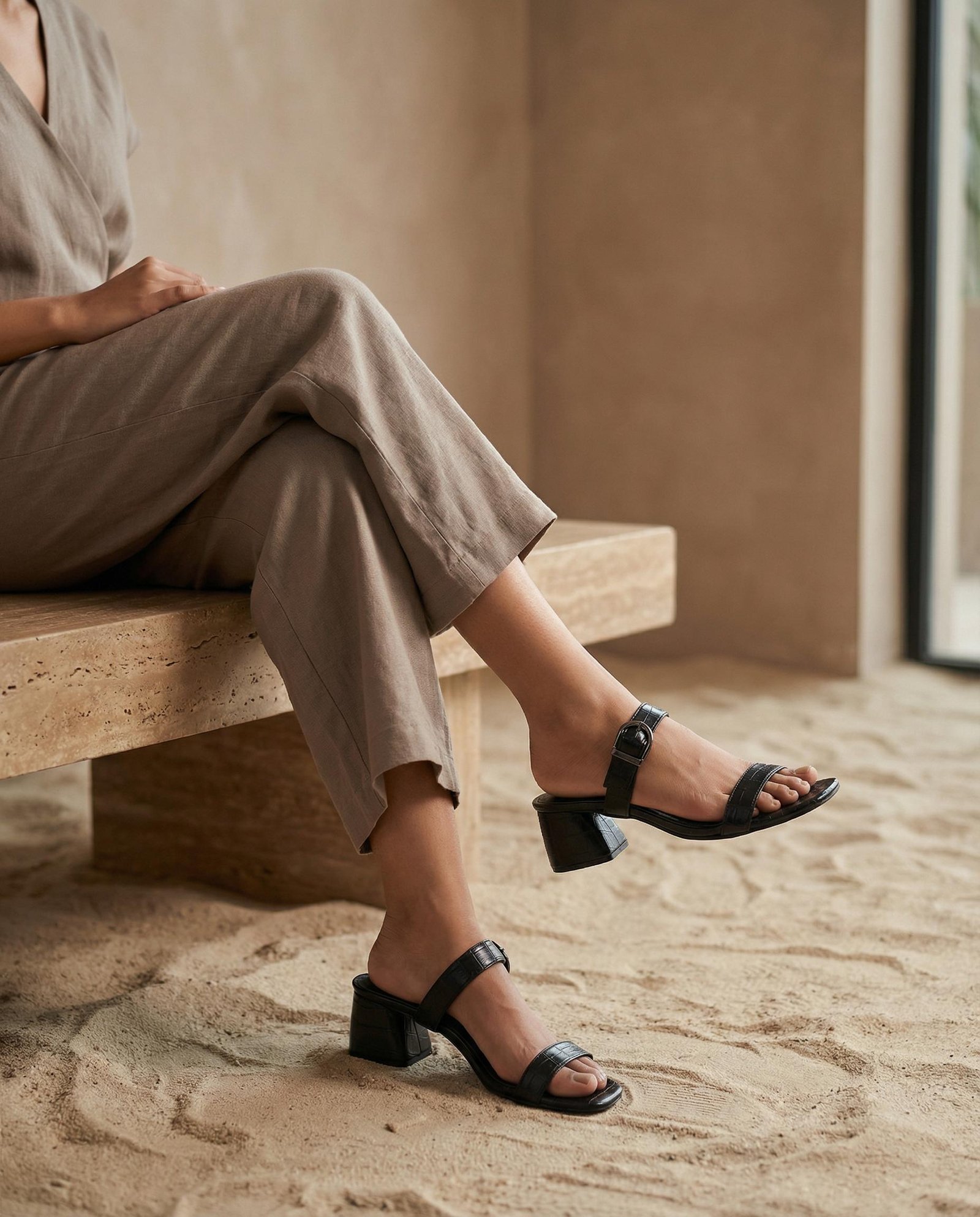
Finding a beautiful pair of heels is easy. Finding a pair that looks good and feels right on your feet takes a little more thought.
Foot width, toe shape, heel height, straps and the overall construction of the shoe can all affect how a pair feels when you actually start walking.
The good news? You don’t need to become a footwear expert.
Understanding a few basics can help you choose heels that suit your feet, your outfit and, most importantly, the moment you’re buying them for.
Quick Guide: Which Heels Might Suit You?
| If you… | Consider looking for… |
|---|---|
| Have wider feet | Roomier forefoot, open-toe styles and comfortable straps |
| Have narrow feet | Secure straps and styles that hold the foot in place |
| Prefer more stability | Block heels or other wider heel bases |
| Are new to heels | Lower or moderate heel heights |
| Spend longer periods standing | Stable construction and cushioning |
| Often experience toe pressure | More room around the toe area |
| Find your feet sliding forward | Better-fitting, more secure straps and construction |
Think of this as a starting point rather than a strict rule. The actual fit of the footwear matters more than the style name printed on the box.
1. Start with Your Foot Shape
Two people who normally buy the same shoe size can have very different experiences with the same pair of heels. That’s because size is only one part of fit.
Before choosing your next pair, consider the width of your feet, the shape and length of your toes, where you normally experience pressure, whether your heel tends to slip, and whether your foot slides forward while walking.
2. Choosing Heels for Wider Feet
If footwear often feels tight around the front or sides of your feet, look for heels that provide adequate room across the forefoot. Open-toe styles may provide more freedom around the toes, depending on their construction. You can also consider styles with broader, comfortably positioned straps rather than narrow straps that place pressure on a small area.
A wider heel base, such as a block heel, can also provide a more stable feel when walking. Most importantly, don’t buy painfully tight heels expecting them to eventually become comfortable.
3. Choosing Heels for Narrow Feet
For narrower feet, the problem can sometimes be keeping your foot securely positioned inside the shoe. If your foot repeatedly slides forward or your heel lifts significantly while walking, look for designs with straps or uppers that hold the foot more securely.
Avoid automatically choosing a smaller size just to prevent slipping. A shoe that’s too short may solve one problem while creating another by placing unnecessary pressure on your toes.
4. Consider Your Arch and Overall Support
Regardless of your foot shape, stability and support matter when choosing heels. If you know that certain styles leave your feet feeling uncomfortable after a short period, pay attention to what those shoes have in common.
Consider heel height, cushioning, stability of the heel, position of the straps and how securely the shoe holds your foot. A dramatic heel may look beautiful, but if you’re planning to spend several hours standing or walking, a moderate heel with a stable base may be a more practical choice.
5. Pay Attention to Your Toe Shape
Toe shape is easy to overlook when buying heels online. Some people have a longer big toe. Others have a second toe that extends further. Some feet naturally spread more across the front.
The front of the footwear should give your toes adequate room without excessive compression. This becomes particularly important with pointed or narrow-toe designs.
6. Choose the Right Heel Height
Higher doesn’t automatically mean better. The right heel height depends heavily on where you’re going and how long you’ll be wearing the footwear.
For everyday outings or occasions involving more walking, you may prefer a lower or moderate heel. For a dinner, party or shorter event, you might prefer something higher or more expressive.
Before buying, ask yourself: How many hours am I realistically going to wear these?
7. Consider Block Heels for Additional Stability
If you’re relatively new to heels—or simply prefer a more stable feel—block heels are worth considering. The wider heel base can feel more stable than a very narrow heel.
Depending on the design, block heels can work beautifully with jeans, trousers, dresses, skirts and evening outfits.
8. Don’t Ignore the Straps
Straps aren’t just a design detail. They also influence how securely your foot stays positioned inside the footwear.
An ankle strap can help hold the foot in place, while front straps help secure the forefoot. The straps should feel secure without digging painfully into your skin.
9. Check How the Heels Feel While Walking
Never judge the fit of heels only while sitting down. Stand up and walk in them.
Ask yourself whether your toes are compressed, your foot slides forward, your heel repeatedly slips, the straps dig into your skin, you feel stable, and whether there is an obvious pressure point.
10. Try Footwear Later in the Day
Your feet can change slightly in size throughout the day. If possible, trying footwear later in the day can give you a better idea of how it may feel after you’ve been active for several hours.
11. Don’t Rely Only on the Shoe Size
Your usual size is a useful starting point—not a guarantee of perfect fit. When shopping online, measure your feet, check the brand’s size guide, consider the shape of the footwear, and read any available fit information.
If you’re unsure how to measure your feet correctly, our TwoSolez Size Guide can help you choose the appropriate size before ordering.
12. Match Your Heels to the Occasion
There isn’t one perfect pair of heels for every situation. Instead of asking “Which heels look the best?”, try asking “Where am I going, how long will I wear them, and how do I want to feel?”
Finding the Pair That Feels Right
The best heels aren’t necessarily the tallest, trendiest or most dramatic pair. They’re the ones you look forward to wearing.
At TwoSolez, we believe footwear becomes part of the places you go, the people you meet and the moments you remember.
Explore the TwoSolez Heels Collection to discover heels designed for moments worth stepping into.
Because some shoes are worn. Some are remembered.
Frequently Asked Questions
What type of heels are easiest for beginners?
Many people find lower or moderate block heels easier to start with because the wider heel base can provide a more stable feel than very narrow heels. The fit and construction of the individual shoe still matter.
Are block heels easier to walk in?
A wider heel base can provide more stability, which may make block heels easier for some people to walk in compared with narrow heels.
How should heels fit?
Heels should hold your feet securely without painfully squeezing them. Your toes shouldn’t feel excessively compressed, and your feet shouldn’t slide significantly forward while walking.
Should I buy heels one size bigger?
Not automatically. A larger size can cause your foot to move or slip inside the footwear. Measure your feet, check the brand’s size guide and consider the construction of the particular style.
How do I choose comfortable heels for longer wear?
Consider moderate heel heights, stable heel construction, adequate toe room, comfortable straps and cushioning. Most importantly, choose footwear that fits your feet correctly.
How can I tell if my heels are too small?
Common signs include toes pressing tightly against the front, uncomfortable pressure around the sides of your feet, straps digging excessively into the skin or pain appearing soon after putting them on.
Are heels supposed to feel tight when they’re new?
They should feel secure, but they shouldn’t be painfully tight. Don’t rely on significant discomfort disappearing simply because you’ve worn the footwear for longer.