

No products in the cart.
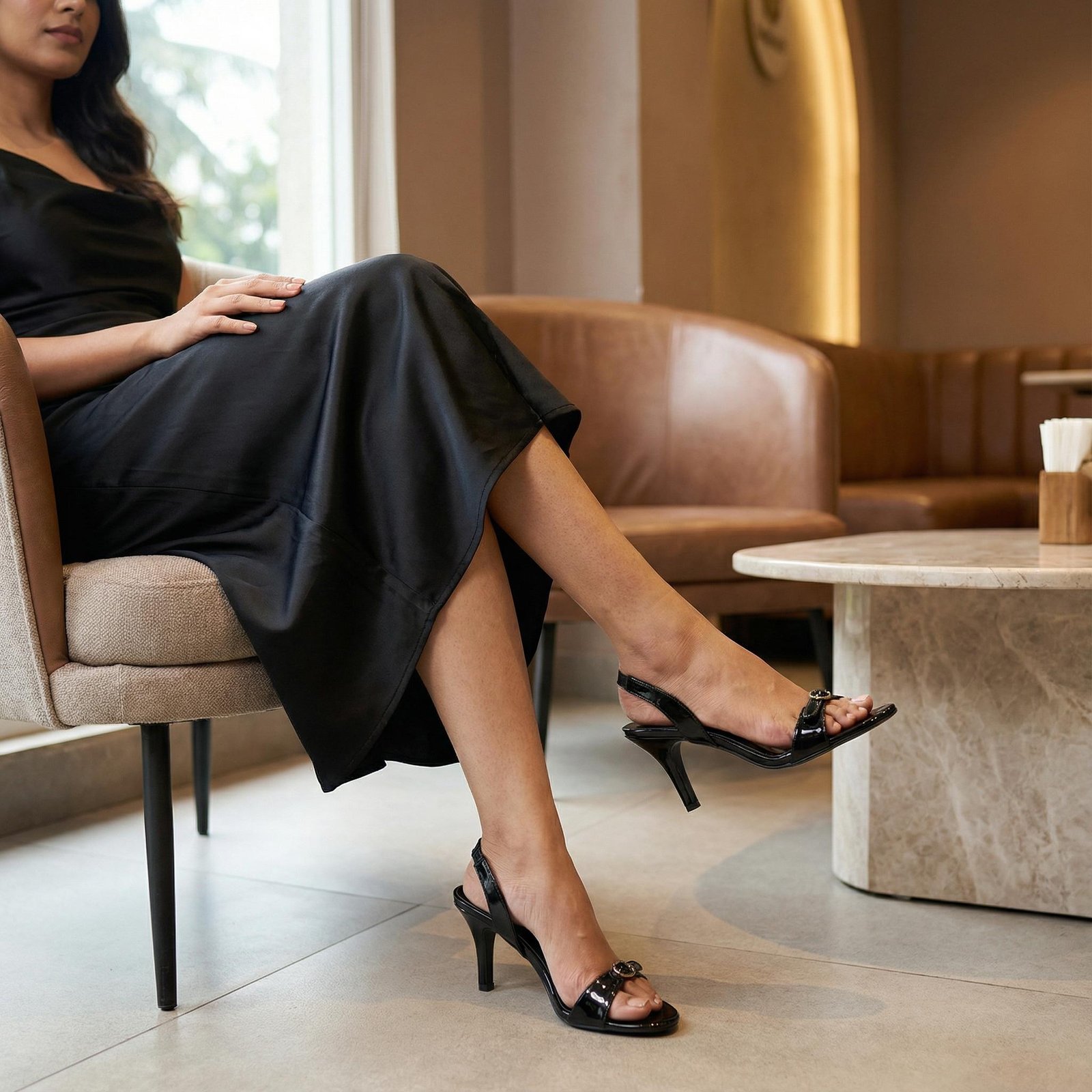
A pair of heels can look perfect when you first put them on.
The real test often comes a few hours later.
If you’re choosing heels for a dinner, celebration, work event or any occasion where you’ll be wearing them for longer, appearance is only part of the decision. Fit, heel height, toe room, stability and the way the footwear holds your foot all become more important.
No heel can guarantee all-day comfort for every person. But choosing thoughtfully can help you find a pair that suits your feet and the plans ahead.
Quick Guide: What to Look for in Heels for Longer Wear
| Consider | Why it matters |
|---|---|
| Heel height | More height can require more adjustment while standing and walking |
| Heel base | A broader base may feel more stable for some wearers |
| Toe room | Excessive pressure at the front can become uncomfortable |
| Straps | They should secure the foot without digging painfully |
| Fit | Feet should not slide excessively or feel compressed |
| Cushioning | Can influence how the footwear feels underfoot |
| Your plans | Standing, walking and sitting create different demands |
1. Start with the Occasion
Before choosing the shoes, think about the day or evening itself.
Will you mostly be sitting at dinner? Walking between locations? Standing through a long event? Travelling before you arrive?
The pair that works for a two-hour dinner may not be the pair you want for an event involving several hours of standing.
Choose for the actual plan, not just the photograph.
2. Don’t Automatically Choose the Highest Heel
Heel height changes both the appearance of the shoe and the way you experience it.
If you already know you’re comfortable at a certain height, that’s useful information. If you’re experimenting with a higher heel for the first time, a long event may not be the ideal place to test your limit.
For longer wear, a lower or moderate height may be easier to incorporate into your plans.
3. Consider the Heel Base
A very narrow heel and a broad block heel create different experiences underfoot.
For some wearers, a broader heel base can provide a more stable feeling, particularly when standing or moving across different surfaces.
That doesn’t make every block heel comfortable or every narrow heel difficult. The complete design still matters.
4. Give Your Toes Enough Room
A beautiful shoe becomes difficult to enjoy when your toes feel compressed from the moment you put it on.
Check the front of the footwear carefully.
Your toes should sit naturally rather than feeling painfully squeezed together. This is especially important with narrower or pointed silhouettes.
Don’t rely on significant discomfort disappearing simply because you’ve worn the pair for longer.
5. Make Sure Your Foot Isn’t Sliding Forward
If your foot constantly moves toward the front of the shoe, you’ll spend the entire occasion trying to reposition it.
Check the size, heel height, front construction and straps.
A secure fit should help keep your foot positioned without requiring you to grip the shoe with your toes while walking.
6. Look at How the Straps Are Positioned
Straps can make footwear feel secure, but their placement matters.
A narrow strap sitting directly over a sensitive area may become noticeable after longer wear. Wider or thoughtfully positioned straps may distribute contact differently.
When trying the pair, don’t just stand still. Walk and notice whether any strap repeatedly rubs or digs into the skin.
7. Cushioning Matters, but It Isn’t Everything
Cushioning can affect how footwear feels underfoot, but it cannot compensate for the wrong size or a shape that doesn’t suit your foot.
Think of cushioning as one part of the overall design.
Fit comes first.
8. Walk in the Shoes Before the Occasion
If possible, don’t let a major event be the first time you spend more than a few minutes in a new pair.
Try them indoors on a clean surface.
Pay attention to pressure points, slipping, strap placement and whether the heel feels stable.
9. Think About the Surface You’ll Be Walking On
Smooth indoor floors, pavements, uneven outdoor surfaces and lawns can all feel different in heels.
A heel that feels secure indoors may be less practical on an uneven surface.
Consider the venue when deciding between a narrow heel and a broader base.
10. Your Usual Shoe Size Is Only the Starting Point
Different footwear shapes can fit differently even when the number printed on the box is the same.
Measure your feet, check the brand’s size guide and consider the actual shape of the shoe.
If you’re unsure how heel fit should feel, read our guide: How to Choose the Right Heels for Your Foot Type.
11. Give Yourself Options for Very Long Events
For an unusually long event, some people prefer having another pair available for later.
Whether that’s useful depends entirely on the occasion, but planning ahead is better than discovering several hours in that the footwear doesn’t suit what the day requires.
12. Don’t Ignore Early Discomfort
There’s a difference between getting accustomed to a new style and footwear that clearly doesn’t fit correctly.
Painful squeezing, strong pressure, repeated slipping or straps that immediately dig into the skin are worth paying attention to.
The right pair shouldn’t require you to ignore what your feet are telling you.
Choosing Heels for the Hours Ahead
Longer wear doesn’t mean you have to give up the shoes you love.
It simply means looking beyond appearance.
Choose the heel height you can manage, a fit that holds your foot securely and a design appropriate for where you’re actually going.
Explore the TwoSolez Heels Collection and find a pair for plans worth staying out for.
Because some shoes are worn. Some are remembered.
Frequently Asked Questions
What heel height is best for long hours?
There is no universal best height. A lower or moderate heel may be easier for many people to wear for longer, but individual experience, fit and footwear construction matter.
Are block heels better for longer wear?
Some wearers find a broader heel base more stable than a very narrow heel. Comfort still depends on height, fit, toe room, straps and the complete design.
Should heels feel tight when I first buy them?
They should feel secure, not painfully tight. Significant squeezing or pressure can indicate that the size or shape isn’t right.
Does cushioning make heels comfortable?
Cushioning can influence how a shoe feels, but it cannot fix an incorrect size or unsuitable shape.
How can I stop my feet sliding forward in heels?
Check whether the size, heel height, straps and front construction hold your foot appropriately. Don’t automatically size down, as that can create pressure elsewhere.
Should I wear new heels before an event?
Trying them indoors before a longer event can help you understand the fit and identify pressure points or slipping before you rely on them for several hours.