

No products in the cart.
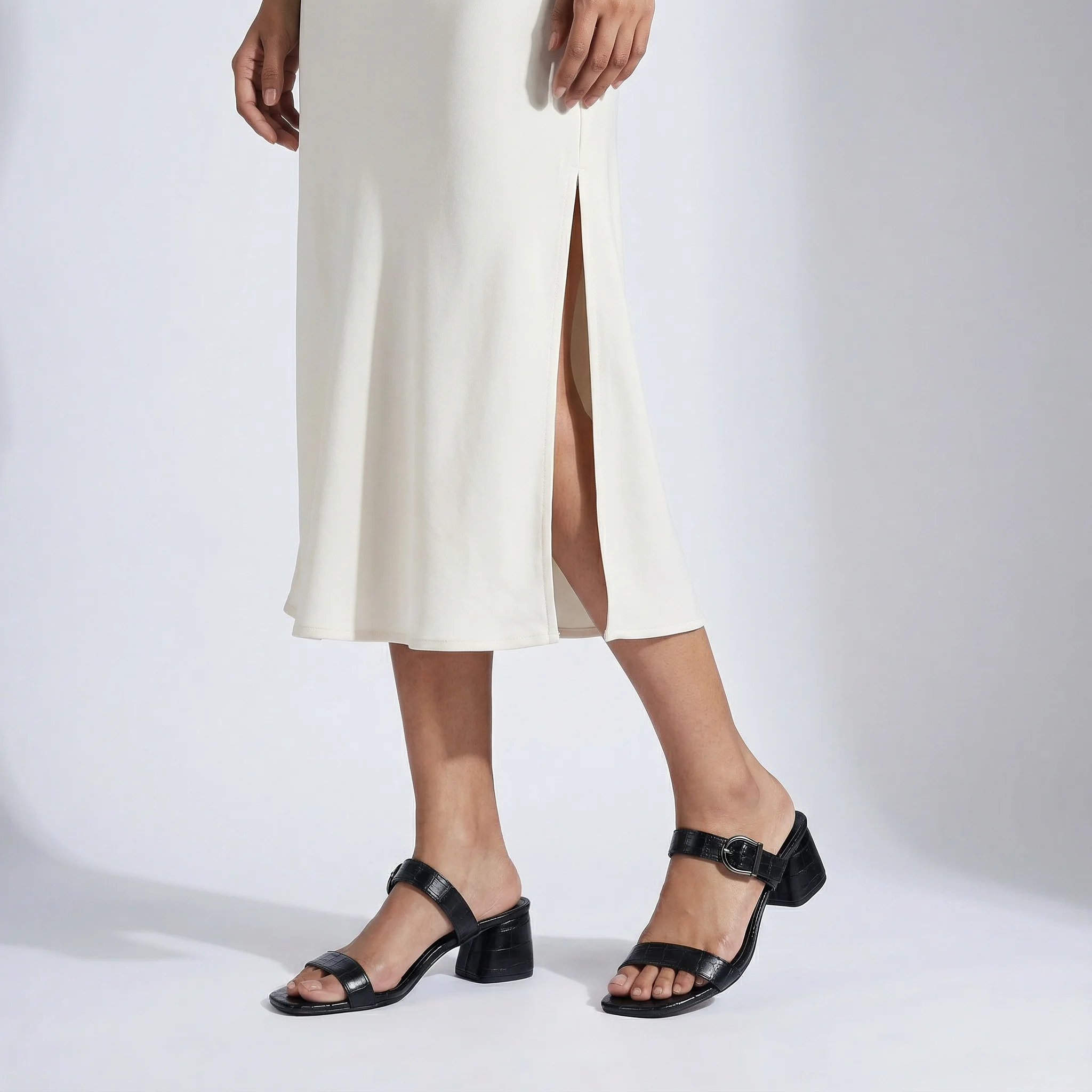
How high should an everyday heel be?
There’s no single number that works for every woman.
Your ideal heel height depends on your experience, the individual shoe, how much walking you do and what “everyday” actually means in your life.
For one person, everyday means travelling to work and moving between meetings. For another, it means lunch, driving and a few hours out.
Instead of searching for one perfect measurement, think about the relationship between heel height and your routine.
Quick Guide
| Your day involves… | Consider |
|---|---|
| Lots of walking | Lower or moderate elevation |
| Mostly sitting | A wider range of heights may work |
| Standing for longer | Stability and fit become especially important |
| You’re new to heels | Start lower/moderate |
| Short dinner or event | You may choose more height if comfortable |
| Uneven surfaces | Consider the heel base as well as height |
1. Heel Height Is Only One Part of the Story
Two heels of the same height can feel completely different.
One may have a broad base and secure straps. Another may have a narrow heel and a different toe shape.
So don’t judge everyday suitability from height alone.
2. Low Heels
Low heels provide a small amount of elevation.
They can be useful when you want a subtle lift without making heel height the dominant feature of the footwear.
Depending on the design, they can work with trousers, denim, dresses and smart-casual outfits.
3. Moderate Heels
Moderate heels sit between low everyday elevation and more dramatic high heels.
For many wardrobes, this range can offer a useful balance between a visibly elevated silhouette and practical versatility.
The individual fit still matters more than the category.
4. Higher Heels
Higher heels create a stronger visual effect.
Some experienced wearers may be perfectly comfortable using them regularly, while others prefer reserving them for shorter occasions.
If your everyday routine involves considerable walking or standing, think carefully about whether the height suits those plans.
5. Consider Your Commute
Your footwear doesn’t exist only at your destination.
If your day involves walking to transport, changing trains, crossing uneven pavements or moving between buildings, those parts of the journey matter too.
Choose for the whole day.
6. Think About How Long You’ll Stand
An outfit that works for a seated dinner may feel very different during an event where you’re standing for hours.
When longer wear is involved, read our guide to choosing comfortable heels for long hours.
7. Heel Base Matters Alongside Height
A moderate narrow heel and a moderate block heel don’t create the same experience.
For some people, a broader base feels more stable.
When comparing footwear, look at height and construction together.
8. Your Experience Matters
If you’re new to heels, starting with a manageable height gives you time to become familiar with how elevated footwear changes your movement.
Our beginner’s guide to walking comfortably in heels covers this in more detail.
9. Fit Can Make a Moderate Heel Feel Wrong
Even a relatively low heel can be unpleasant if the shoe is too tight, too loose or shaped poorly for your foot.
Make sure your toes have adequate room, your foot doesn’t slide excessively and the straps hold without painful pressure.
10. Don’t Buy a Number – Buy for the Routine
Instead of deciding that you “need a 2-inch heel” or another fixed measurement, ask what you’ll actually do in the footwear.
How far will you walk? How long will you stand? What surfaces will you encounter? How often will you wear them?
Those answers are more useful than a universal number.
11. Build Your Own Reference Point
Once you find a pair and height that work well for you, remember how they feel.
That gives you a personal reference when shopping in the future.
You may discover that you prefer different heights for everyday plans, dinners and special events.
That’s completely normal.
So, What Heel Height Is Best?
The best everyday heel height is the one that works with your routine, experience and the individual shoe.
For many people, lower or moderate heights can be easier to incorporate into days involving more movement. But there is no universal measurement that guarantees comfort.
Explore the TwoSolez Heels Collection and choose for the places your everyday plans actually take you.
Because some shoes are worn. Some are remembered.
Frequently Asked Questions
What is a good heel height for everyday wear?
There is no universal measurement. Lower or moderate heels may suit days involving more movement, while individual fit and construction remain important.
Are lower heels always more comfortable?
Not necessarily. A low heel can still fit poorly. Toe room, width, straps, cushioning and overall construction all influence comfort.
Can I wear high heels every day?
Whether a particular high heel suits your routine depends on the individual wearer, shoe and activities involved. Consider how much walking and standing your day requires.
Does a block heel feel different from a narrow heel at the same height?
It can. A broader base may feel more stable for some wearers even when the heel height is similar.
What heel height should a beginner start with?
A lower or moderate heel can be a practical starting point while you become familiar with elevated footwear.
Should I choose heel height based on my height?
Your own height doesn’t determine the correct heel height. Choose according to fit, experience, outfit, occasion and what feels manageable.