No products in the cart.
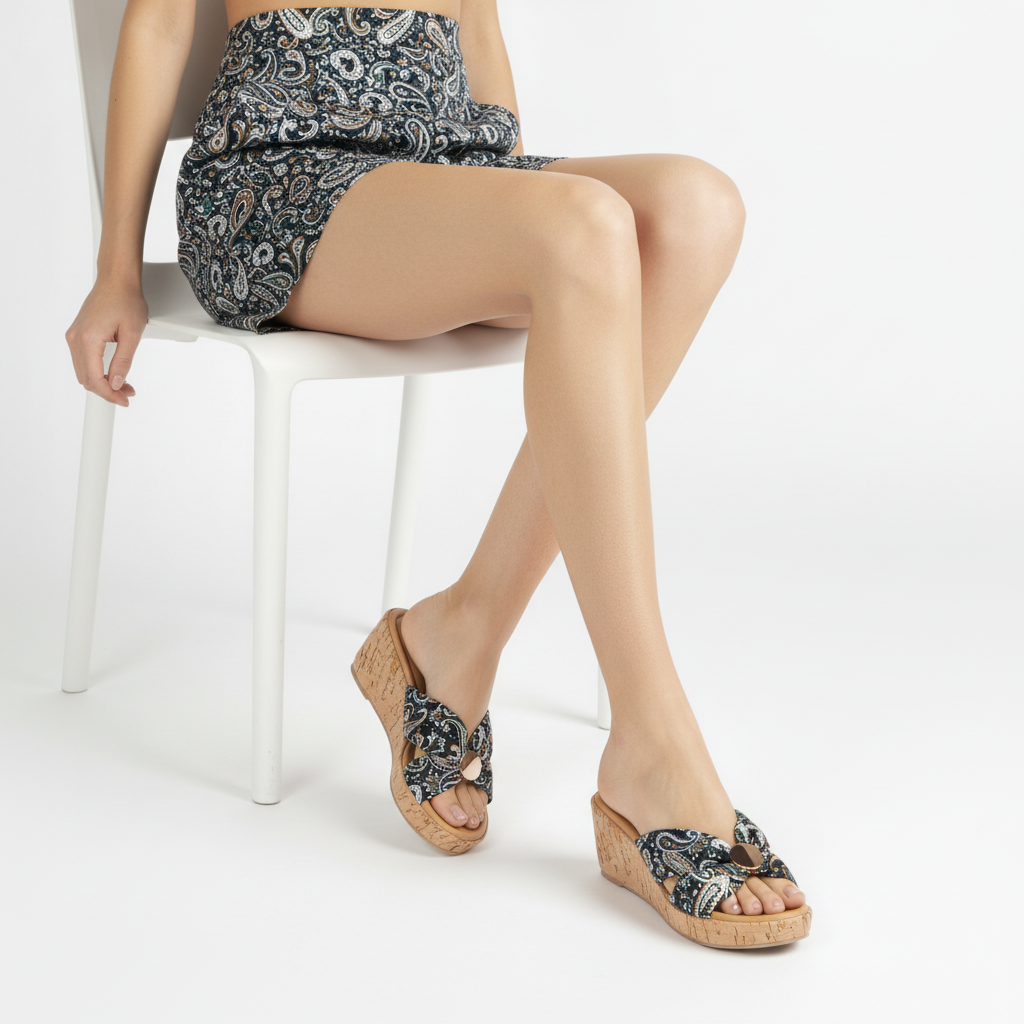
Wedges and block heels can both create a broader, more substantial look than a narrow heel.
But they are not the same thing.
The main difference is construction: a wedge uses a raised structure extending beneath a larger portion of the sole, while a block heel uses a separate broad heel beneath the back of the foot.
That difference changes both the silhouette and the way the shoe meets the ground.
Quick Comparison
| Feature | Wedges | Block heels |
|---|---|---|
| Construction | Raised structure extends beneath more of the sole | Separate broad heel at the back |
| Side profile | Often continuous or connected | Clear separation between front sole and heel |
| Heel base | Part of larger wedge structure | Broad individual heel |
| Heights | Varies | Varies |
| Styling | Casual to dressy | Casual to dressy |
| Ground contact | Depends on wedge/sole design | Broad heel contact plus front sole |
1. What Is a Wedge?
A wedge is elevated footwear where the raised structure extends beneath more of the foot rather than appearing only as a separate heel at the back.
Some wedges have a solid-looking side profile. Others use cut-outs or more sculpted constructions.
The defining idea is the extended raised structure.
2. What Is a Block Heel?
A block heel is a conventional heel with a broad base.
There is still a distinct heel at the back of the footwear, separated from the front portion of the sole.
Block heels can be low, moderate or high.
3. The Construction Is the Clearest Difference
Look at the footwear from the side.
With a block heel, you can generally identify the separate heel beneath the back of the foot.
With a wedge, the raised structure continues farther beneath the sole.
This is more useful than judging by height alone.
4. Do They Feel the Same?
Not necessarily.
The way a shoe feels depends on much more than whether it is called a wedge or block heel.
Height, fit, sole shape, toe room, straps, materials and the individual wearer all matter.
Two wedges can feel different from each other, just as two block heels can.
5. Which Has More Ground Contact?
A wedge typically has a larger raised structure beneath the shoe, while a block heel has a broad but separate heel.
However, actual ground contact varies by design.
Some wedges have cut-outs or shaped soles, so it is better to inspect the specific pair rather than make assumptions from the category.
6. Which Looks More Substantial?
Both can.
Wedges often create a stronger continuous side profile.
Block heels create visual weight at the back of the shoe while retaining a more conventional heel-and-sole separation.
The outfit can make either one feel delicate or bold.
7. Which Works Better with Jeans?
Both categories work with denim.
Wedges can add a stronger side silhouette, while block heels can create a more familiar heeled profile.
The jeans cut and hem length often matter more than the category.
8. Which Works Better with Dresses?
Again, both.
A wedge can complement relaxed dresses, structured dresses and many styles in between.
Block heels can do the same.
Choose according to the visual balance you want rather than treating one as the “dress” option and the other as the “casual” option.
9. Which Is Better for Beginners?
There is no universal answer.
Some people prefer a broader-feeling base while learning to wear elevated footwear, but the actual height and fit of the shoe matter greatly.
If you are new to heels, start with a manageable pair rather than choosing only by category.
10. What About Longer Events?
Look at the complete footwear design.
A moderate wedge may suit one wearer, while a moderate block heel suits another.
Fit, height and the amount of standing or walking involved are more useful considerations than assuming one construction guarantees comfort.
11. How Do They Compare with Stilettos?
A stiletto uses a narrow heel, which gives it a distinctly different profile from both wedges and block heels.
Our Block Heels vs Stiletto Heels guide explains that comparison in detail.
12. Wedges vs Heels Is a Broader Comparison
Remember that block heels are one type of heel.
So “wedges vs block heels” is a more specific question than “wedges vs heels.”
For the broader distinction, read Heels vs Wedges: What’s the Difference and Which Should You Choose?
Which Should You Choose?
Choose a wedge when you like the extended raised structure and the silhouette it creates.
Choose a block heel when you prefer a separate, broad heel at the back.
Then compare the actual height, fit and design of the individual pairs.
Explore the TwoSolez Wedges and Heels collections to find the shape that fits your next plan.
Because some shoes are worn. Some are remembered.
Frequently Asked Questions
Are wedges and block heels the same?
No. A wedge has a raised structure extending beneath more of the sole, while a block heel uses a separate broad heel at the back.
Are block heels a type of heel?
Yes. “Block” describes the broad shape of the separate heel.
Are wedges considered heels?
Wedges are elevated footwear and are often discussed alongside heels, but their sole/heel construction is different from a conventional separate heel.
Which is more stable, wedges or block heels?
The answer depends on the individual design, height, fit and wearer. A category name alone does not guarantee stability.
Can I wear both wedges and block heels with jeans?
Yes. Both work with denim when the proportions and hem length suit the footwear.
Which is dressier: wedges or block heels?
Neither category is automatically dressier. Materials, colour, upper design and the overall outfit determine the final look.