No products in the cart.
Block heel or stiletto?
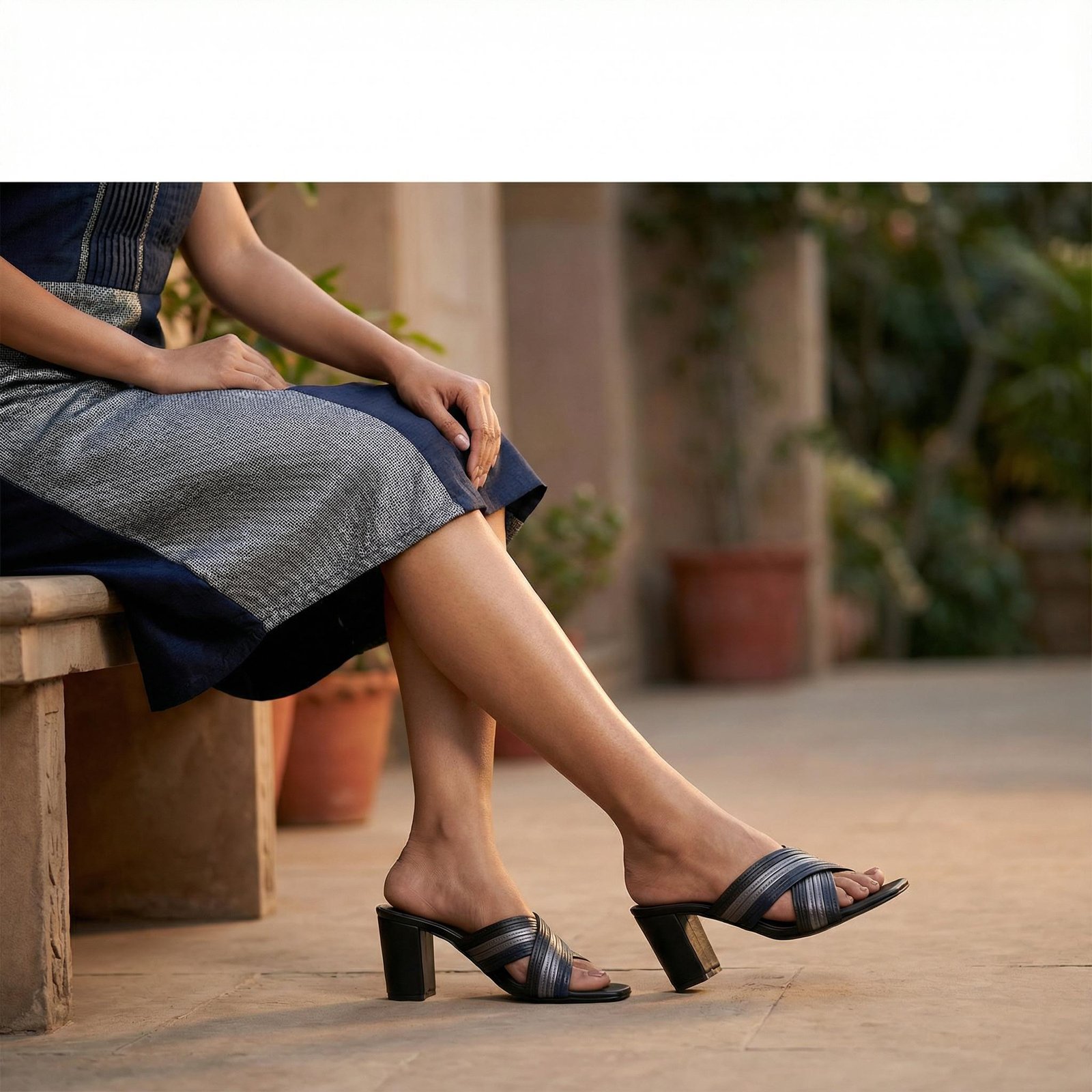
Both belong to the heels family, but visually—and underfoot—they can feel very different.
The main difference is easy to see: block heels use a broader heel base, while stilettos are defined by a very narrow heel.
That difference affects the silhouette, styling and the way each pair interacts with the ground.
Quick Comparison
| Feature | Block heels | Stiletto heels |
|---|---|---|
| Heel shape | Broad | Very narrow |
| Visual feel | Structured / substantial | Slim / delicate |
| Ground contact | Larger heel area | Small heel point |
| Heights available | Low to high | Often moderate to high, but varies |
| Styling | Casual to dressy | Often polished / evening-oriented |
| Stability | Broader base may feel more stable | Narrow base requires different balance |
1. What Are Block Heels?
A block heel has a broad, substantial base beneath the heel of the foot.
The shape can be square, rectangular or slightly curved depending on the design.
Block heels can appear at many heights, which means the term describes the shape of the heel rather than a fixed level of elevation.
2. What Are Stiletto Heels?
Stilettos are recognised by their narrow heel.
They create a slimmer, more delicate profile from the side and back.
Although many stilettos are high, heel height can vary. The narrow construction is the defining characteristic.
3. The Biggest Difference Is the Base
Place a block heel and stiletto side by side and the distinction is immediately visible.
A block heel has more heel surface contacting the ground.
A stiletto concentrates that contact into a much smaller point.
This changes both the visual appearance and how the footwear may feel while standing or walking.
4. Which Feels More Stable?
For some wearers, a broader block heel can feel more stable because of its larger base.
That doesn’t automatically make every block heel easy to wear.
A very high block heel may still require more adjustment than a lower heel.
Likewise, someone experienced in stilettos may feel perfectly confident in them.
5. Which Is Better for Beginners?
If you’re new to heels, you may find a moderate block heel a useful starting point because of the broader base.
But heel height, fit and your own experience matter.
There is no requirement to “graduate” from one type to another.
Wear the style that suits you.
6. How Block Heels Look with Outfits
Block heels work easily with jeans, trousers, dresses and skirts.
Their more substantial shape can complement relaxed denim particularly well.
Depending on the design, they can move from casual daytime styling to dinners and events.
7. How Stilettos Look with Outfits
The narrow silhouette of a stiletto can create a more delicate or dramatic finish.
They’re often associated with evening outfits, tailored looks and dresses, although styling depends entirely on the individual shoe.
8. Consider the Surface
A narrow heel interacts differently with the ground than a broad block heel.
If an event involves uneven outdoor surfaces, grass or other challenging terrain, consider how the heel construction will behave before choosing your footwear.
9. Heel Height Still Matters
Don’t compare block heels and stilettos without considering height.
A low block heel and a very high stiletto are not equivalent simply because both are “heels.”
Our guide to everyday heel height explains why height and construction should be considered together.
10. Fit Matters for Both
Neither heel type will work well if the shoe doesn’t fit.
Check toe room, straps, slipping, overall length and how securely the footwear holds your foot.
A well-fitting stiletto may suit you better than a poorly fitting block heel—and vice versa.
11. Which One Should You Choose for Longer Events?
Look at the complete pair rather than assuming the answer from the heel shape.
Consider height, base, fit, toe shape, straps, cushioning and how much standing or walking is involved.
12. Do You Need Both?
Not necessarily.
If one silhouette works particularly well with your wardrobe, there’s nothing wrong with preferring it.
But having different heel constructions can give you more styling options.
A block heel can bring structure to one outfit while a stiletto creates a completely different finish for another.
Block or Stiletto?
Choose block heels when you like a broader, more substantial heel silhouette.
Choose stilettos when you want the distinctive appearance of a narrow heel.
Then let fit, height and the occasion determine the individual pair.
For a broader overview, read Different Types of Heels Every Woman Should Know.
Explore the TwoSolez Heels Collection to find the silhouette that belongs in your next memory.
Because some shoes are worn. Some are remembered.
Frequently Asked Questions
What is the difference between block heels and stilettos?
Block heels use a broad heel base, while stilettos are characterised by a very narrow heel.
Are block heels more stable than stilettos?
The broader base can feel more stable for some wearers, but height, fit and individual experience also matter.
Are block heels good for beginners?
A moderate block heel may be a useful option for someone new to heels because of its broader base. The individual shoe still needs to fit correctly.
Are stilettos always very high?
No. Although stilettos are often associated with higher heels, the defining characteristic is the narrow heel shape rather than one exact height.
Can block heels be worn with dresses?
Yes. Depending on their design, block heels can work with dresses, skirts, trousers and denim.
Which is better for long events: block heels or stilettos?
There isn’t one answer for everyone. Consider the complete footwear design, heel height, fit and how much standing or walking the event involves.